
Blog Post
The Biggest AI Lie in the Workplace: “Job Replacement”
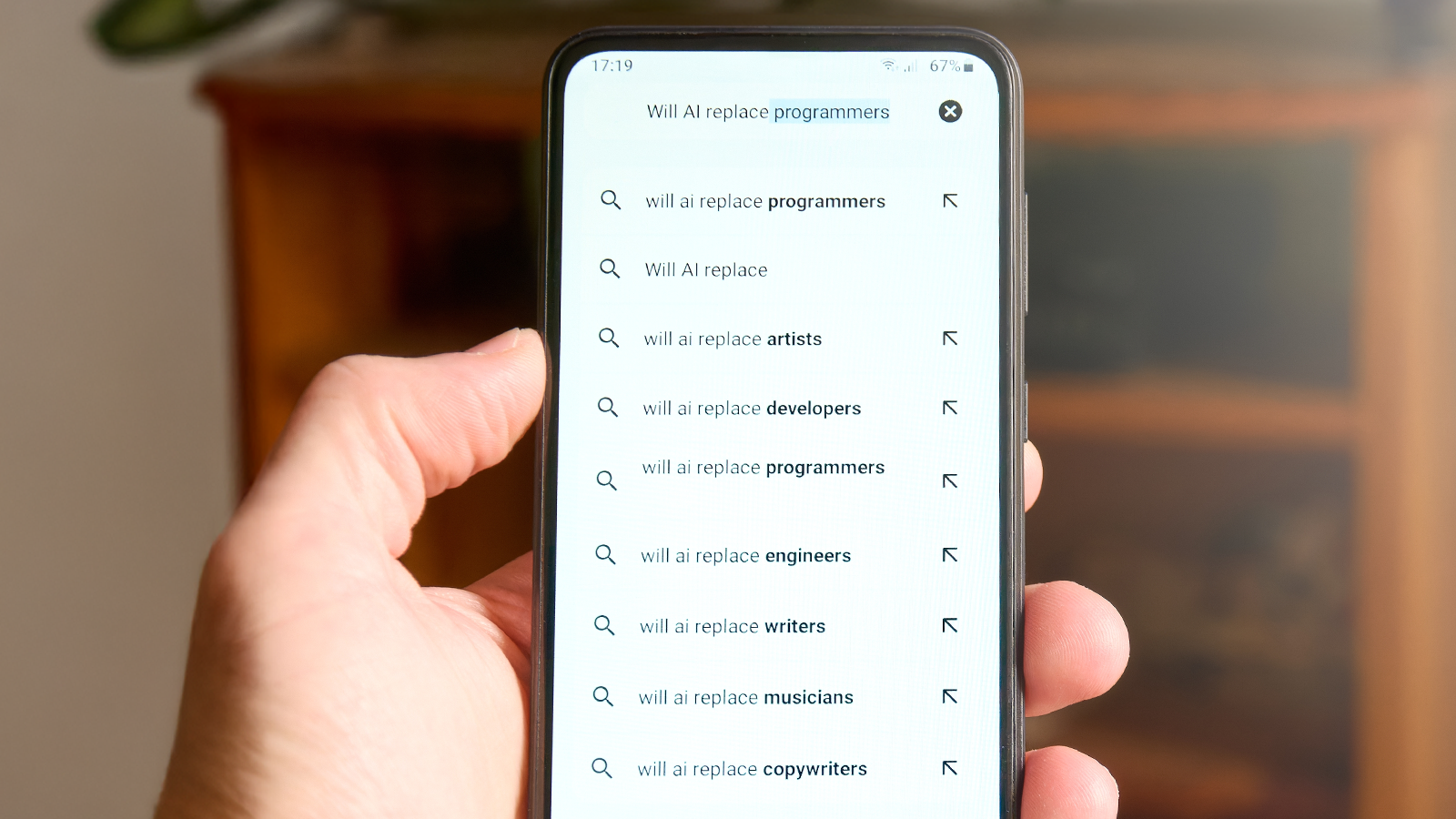
For more than a decade, the dominant narrative around AI in the workplace has been that it will replace jobs. It is a compelling headline, but it is misleading. The more important shift is not workforce elimination. It is operating model transformation.
The real question is whether operating models, many built for a previous AI is changing how work is structured, how decisions are made, how accountability is enforced, and how organizations scale in increasingly complex environments. For leadership teams, the real issue is not whether AI will reduce headcount. It is whether the organization’s current model, often built for a different era, can withstand rising complexity, regulatory pressure, and higher customer expectations.
A narrow focus on labor substitution misses the broader strategic opportunity: redesigning work to improve clarity, resilience, speed, and judgment at scale.
The Bigger Risk is Not Job Loss. It is Organizational Overload.
Many leadership teams still frame AI primarily as a workforce question. In practice, the more urgent business challenge is structural overload.
Across industries, work has become more fragmented, more compliance-intensive, and more demanding. Customer expectations continue to rise, while frontline and operational teams are expected to move faster with less friction and greater precision.
They are still being asked to operate across disconnected systems, manage repetitive low-value tasks, document every action for compliance, and navigate emotionally sensitive situations with incomplete context.
More hiring alone will not solve this. More technology layered onto broken workflows will not solve it either. The issue is not simply capacity. It is work design.
Organizations that fail to address this will see mounting decision fatigue, slower execution, inconsistent service delivery, and declining employee engagement. Those that redesign work intelligently will create greater resilience, stronger governance, and more organizational capacity for high-value judgment.
AI Has Not Been Replacing Jobs. It Has Been Replacing Tasks.
The practical impact of AI to date has been far more specific than public discourse suggests. AI has primarily replaced tasks, not roles.
Early automation reduced manual data entry, basic retrieval work, and straightforward rules-based activities. But accountability never disappeared. Human teams still manage exceptions, apply judgment, ensure compliance, and handle the interpersonal and ethical dimensions of work that technology cannot own.
In many cases, automation removed procedural effort while increasing cognitive burden. Employees became the escalation point for everything nuance, ambiguity, risk, and responsibility could not resolve on its own.
That is why the next phase of AI adoption matters. The real opportunity is not simply using AI to accelerate activity. It is using AI to elevate judgment.
Organizations that design AI around augmentation rather than substitution will produce better decisions, more resilient workflows, and stronger performance in environments where complexity is the norm.
Executives Need to Distinguish Automation from Agentic AI
One reason the “job replacement” narrative persists is that too many organizations still treat all AI as if it were the same. It is not.
Traditional automation is rules-based, reactive, and narrow. It performs predefined tasks efficiently, but it is brittle, dependent on structured inputs, and often requires significant human intervention when conditions change.
Agentic AI represents a more advanced operating capability. It is designed around outcomes, not isolated tasks. It can coordinate multi-step actions, make bounded decisions, adapt to changing conditions, and escalate to people when human judgment is required.
Platforms such as DDC Evora are built around this model, helping organizations orchestrate work more intelligently while preserving human oversight where it matters most.
This distinction is crucial. When leaders mistake agentic AI for basic automation, they either over trust it or underutilize it. Both create risk. The strongest organizations are not deploying advanced AI to remove humans from the equation. They are deploying it to ensure human judgment is reserved for the moments where it creates the most enterprise value.
The “Job Replacement” Narrative Misunderstands What Work Actually Is
Jobs are not single activities. They are bundles of tasks, decisions, context, and accountability.
As AI capabilities mature, the dividing line is becoming clearer. AI is increasingly well-suited to high-volume repeatable inquiries, data retrieval, system updates, real-time documentation, and consistency-based compliance checks.
Human value remains concentrated in judgment, discretion, negotiation, ethical accountability, empathy, and trust.
That means the future of work is not about eliminating roles wholesale. It is about shifting effort away from routine execution and toward decision-making, exception handling, relationship management, and enterprise stewardship.
This is not simply a workforce planning issue. It is a value creation issue. When routine work is absorbed intelligently, human capacity can be redirected to the activities that most directly influence customer loyalty, operational resilience, regulatory confidence, and competitive differentiation.
AI Becomes Most Strategic Where Emotion, Risk, and Compliance Meet
Some of the highest-value use cases for AI do not sit in pure efficiency gains. They sit at the intersection of customer experience, operational discipline, and regulatory accountability.
Customer failures are rarely caused by technology alone. More often, they result from poor timing, inconsistent execution, incomplete visibility, and emotional misalignment. Frustration may not be obvious until the damage is already done. By then, churn risk, escalation costs, and brand erosion are already in motion.
At the same time, in regulated environments, manual processes make consistency difficult to sustain. Variability in execution creates compliance exposure, which carries legal, financial, and reputational consequences.
This is where AI can create disproportionate enterprise value.
Modern AI platforms can detect patterns earlier, support consistent workflow enforcement, surface sentiment signals in real time, and help teams intervene before operational or customer risk escalates. But the most effective models do not remove oversight. They combine machine consistency with human accountability.
The implication is clear: emotion and compliance are not peripheral concerns. They are core enterprise risks. AI, when governed properly, can become a strategic lever for reducing exposure while improving experience and execution simultaneously.
When AI is Implemented Well, Roles Become More Strategic
Responsible AI deployment does not erase roles. It elevates them. Transactional handling becomes exception management. Script adherence becomes coaching and decision oversight. Manual quality control becomes insight-led optimization. Task completion evolves into outcome ownership.
This shift matters differently across the leadership team.
For COOs, it creates greater resilience, throughput, and executional consistency. For customer and operations leaders, it enables trust and responsiveness at scale. For CIOs and transformation leaders, it ensures AI investment drives measurable business outcomes rather than isolated productivity gains.
The broader strategic benefit is that work becomes more aligned to organizational value. Human effort is moved out of repetitive execution and into areas where judgment, interpretation, and leadership matter most.
That is not workforce reduction. It is operating model maturation
The Real Question for Executives
The most persistent misconception about AI is not that it will replace people. It is that preserving current workflows is the lower-risk option.
It is not.
Existing operating models were largely designed for a slower, more linear, less complex business environment. As volatility, regulation, customer expectations, and data intensity continue to rise, those legacy structures become harder to sustain.
The executives who will lead effectively in this environment are not asking whether AI can do more work. They are asking better questions:
- Which decisions should remain firmly in human hands?
- Which workflows are creating drag, inconsistency, or avoidable risk?
- Where can AI strengthen insight, governance, and responsiveness rather than simply increase speed?
The organizations that answer those questions well will not just deploy AI successfully. They will build more adaptive, resilient, and strategically differentiated enterprises.
Your operating model may be limiting performance, and AI alone will not solve it.
Connect with us to see how DDC Evora helps enterprises redesign work, strengthen human judgment, and build more resilient, outcome-driven operations.